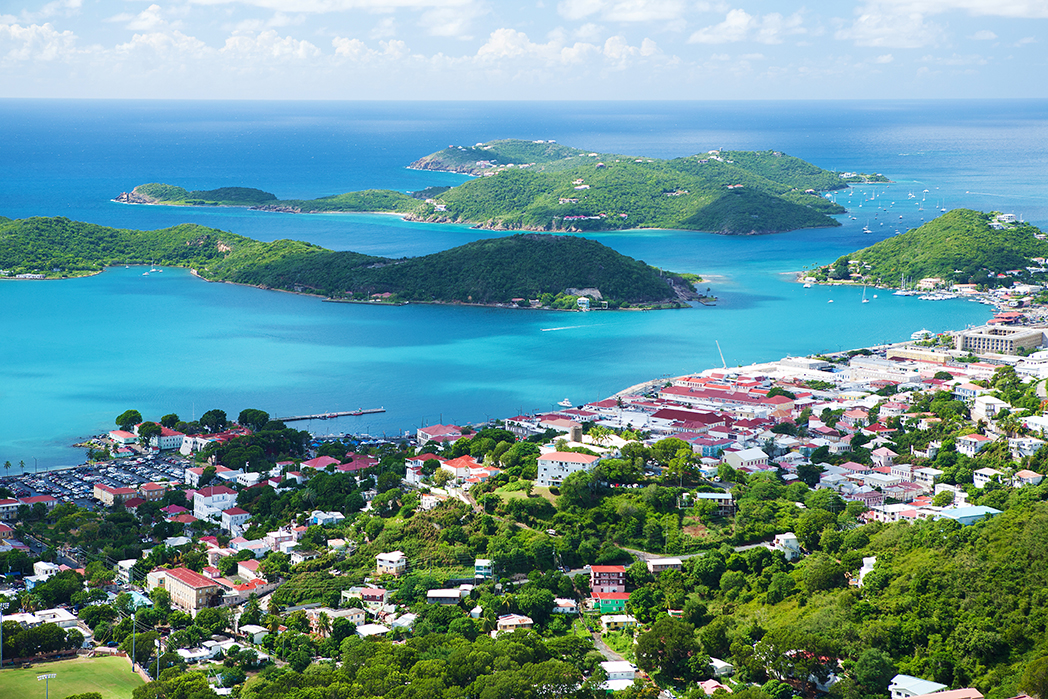
For qualifying individuals and business owners, relocating to the U.S. Virgin Islands can result in a dramatic reduction in income tax, legally, within U.S. jurisdiction, through established economic development programs that have been in place for decades. This isn’t a footnote. For the right candidate, it can represent one of the most consequential financial decisions of their life. And the fact that it comes with year-round warm weather, some of the most beautiful real estate in the Caribbean, and full U.S. legal protections makes it worth understanding in detail.
The USVI Is Not a Foreign Tax Haven
This distinction matters. The U.S. Virgin Islands is a U.S. territory, which means residents operate under U.S. legal protections, use the U.S. dollar, and work within a tax code that mirrors the federal system. Taxes are paid to the Virgin Islands Bureau of Internal Revenue (VIBIR) rather than the IRS, but the rules, brackets, and definitions are familiar.
What makes the USVI different is that its economic development programs can significantly reduce the tax burden for qualifying individuals and businesses, all without stepping outside U.S. jurisdiction.
What the Tax Incentive Programs Actually Offer
The USVI offers two primary corporate incentive pathways, both administered through structured economic development programs.
The Economic Development Authority (EDA) Program is designed for businesses in financial services, consulting, hospitality, manufacturing, and other approved industries that create economic value in the territory. Approved companies may qualify for reduced corporate income tax, reduced personal income tax on dividends and distributions, reduced capital gains treatment, and exemptions on certain excise taxes and property taxes.
The RTPark Program is tailored for technology, fintech, data, digital services, and knowledge-based companies. If your business generates revenue from clients outside the USVI (often called exported or offshore services), it may be especially well-positioned to benefit from the structure of these programs.
Both paths require a genuine local presence, thorough documentation, and long-term compliance. These are not loopholes. They are established, legislated programs designed to encourage investment and economic activity in the territory.
Residency Is Real, and That’s the Point
To access USVI tax benefits as an individual, residency must be genuine. The IRS applies three core tests: physical presence, tax home, and closer connection. Meeting all three is what creates bona fide residency, and that means actually moving your life here.
The most commonly referenced threshold is 183 days per year in the USVI, but physical presence alone is not enough. Your primary place of business must be anchored in the territory, and your personal, financial, and social ties must be stronger here than anywhere else. That means updating your driver’s license, registering to vote, maintaining local bank accounts, and genuinely relocating, not just establishing a mailing address.
For many buyers, this is actually the appeal. The people who make this move successfully aren’t looking for a workaround. They’re looking for a place they want to call home, and they’re grateful to find that the financial case is as strong as the lifestyle one.
What This Means for Real Estate
Establishing bona fide residency requires a genuine home base in the USVI. That’s where real estate becomes central to the conversation, not as an afterthought, but as a foundational piece of the relocation strategy.
Buyers exploring the USVI tax programs tend to approach their property search with a longer horizon. They’re looking for homes that support year-round living: space for family, room for remote work, proximity to their preferred island community. They’re thinking about St. Thomas, St. John, and St. Croix not as vacation destinations but as places to build a life.
The USVI real estate market reflects this. From hillside estates with sweeping harbor views to private waterfront villas and architecturally refined condominiums, the options here support a genuine sense of home, not a second property, but a primary one.
At Sea Glass Properties, we work with buyers who are making this transition thoughtfully. We understand the residency requirements that come with the territory’s tax programs, and we can help you identify properties that are well-suited to your relocation goals while connecting you with the qualified tax and legal professionals who should be guiding the financial side of your decision.
Is This the Right Move for You?
It’s worth taking the time to find out. The USVI’s tax programs are not available to everyone, and the residency requirements are genuine. But for business owners, executives, consultants, and investors whose income and lifestyle align with what the territory offers, this may be one of the most compelling relocation opportunities available to U.S. citizens.
If you’re curious about what living and owning in the USVI looks like in practice, we’d be glad to show you. Browse current listings at seaglassproperties.com or reach out to our team to start the conversation.
Visit usvitaxincentives.com for more information and to take a free assessment to see if you might qualify.
Disclaimer: The information in this post is for general informational purposes only and does not constitute legal, tax, or financial advice. Tax laws and residency requirements are complex and subject to change. Please consult a licensed tax professional or attorney regarding your specific situation before making any decisions.

The information on this website is provided exclusively for consumers' personal, non-commercial use and may not be used for any purpose other than to identify prospective properties consumers may be interested in purchasing. Equal Housing Opportunity: All real estate advertised herein is subject to the Fair Housing Act of 1968.
POPULAR SEARCHES
USVI Residential Rentals USVI Condos for Sale USVI Luxury Real Estate Homes Under $300,000 St. Thomas Waterfront Homes St. Thomas Real Estate Rentals St. Thomas USVI Condos for Sale St. John Waterfront Homes St. John USVI Condos for Sale St. Croix Real Estate Rentals St. Croix USVI Condos for Sale St. Croix Waterfront Luxury Homes Search Florida PropertiesPOPULAR AREAS
Peterborg St. Thomas Real Estate Red Hook St. Thomas Real Estate Ritz Carlton St. Thomas Mahogany Run St. Thomas Real Estate Secret Harbor St. Thomas Real Estate Chocolate Hole St. John Real Estate Cruz Bay St. John Real Estate St. John Map Christiansted St Croix Real Estate East End St Croix Real Estate5328 Yacht Haven Grande
St. Thomas, VI 00802
O: 340.774.5277 F: 340.777.9472
7 King Street, Christiansted
St. Croix, VI 00820
O: 340.715.7772
© 2026 Sea Glass Properties, All Rights Reserved. Powered by Neutrino, Inc. Privacy Policy Terms and Conditions Sitemap
Sign In
Sign in with Facebook Sign in with GoogleCreate an account
Create an Account
Sign up with Facebook Sign up with GoogleAlready have an account? Sign in.
By joining you agree to our Terms of Use and Privacy Policy
International Partners