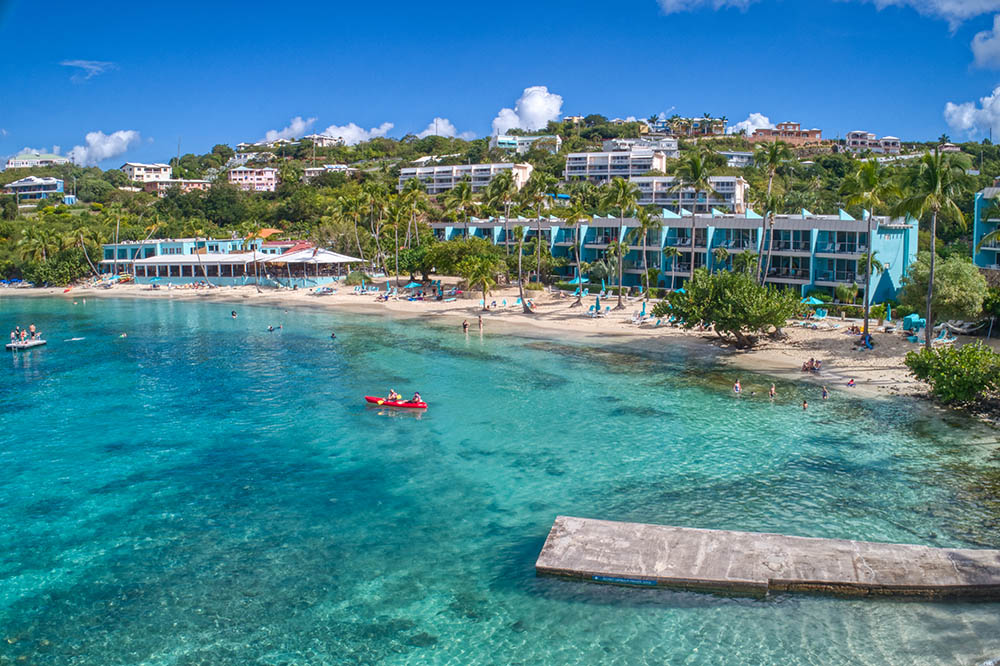
Condos are among the most popular property types in the USVI, and for good reason: oceanfront locations, resort-style amenities, and low individual maintenance burden. But the ongoing cost structure of condo ownership here differs significantly from what mainland buyers expect. Monthly HOA fees on St. Thomas and St. Croix typically range from $800 to $2,000 or more, and that number is driven almost entirely by one line item: windstorm insurance.
Understanding what’s inside that monthly fee, what the association is required to cover, and what you’re responsible for as an individual unit owner is the difference between a sound purchase and an expensive surprise.
What Is Actually Inside a USVI Condo HOA Fee?
A typical USVI condo association fee covers several distinct cost categories. The largest is usually the master insurance policy, which includes windstorm and hurricane coverage on the building structures and common areas. The second is general operating expenses: grounds maintenance, water, common area utilities, staff, management fees. The third is contributions to the reserve fund, which is money set aside for capital repairs and replacements over time.
Not all associations operate this way. Some bundle all costs into a single line item with no transparency. Others, particularly smaller or older complexes, have historically kept fees low by not carrying windstorm coverage on the structures. That is a red flag with direct consequences for financing.
The Windstorm Insurance Issue
Here is the most important thing to know about USVI condo fees: if a complex’s monthly fee seems unusually low (under approximately $700 per month), verify whether windstorm coverage is included in the master policy before you go further.
If it is not, you will have serious difficulty securing a mortgage. Lenders require that the master policy cover windstorm and hurricane damage. A complex without that coverage either cannot support conventional financing, or will require you to find specialty lending at higher rates and with more restrictive terms.
The USVI insurance market operates in what insurers call a “hard market,” meaning fewer carriers, higher premiums, and tighter underwriting. Windstorm premiums across the territory run approximately 1.35% to 2% of replacement cost per year. For a building with an $800,000 replacement cost, that’s $10,800 to $16,000 annually in windstorm premiums alone, before any other coverage. Deductibles on windstorm claims typically run 2% to 5% of the insured value, not a flat dollar amount — meaning a $1 million insured building carries a deductible of $20,000 to $50,000 per claim. That deductible exposure is why a healthy reserve fund is not optional.
What the Master Policy Covers vs. Your HO-6 Policy
The association’s master policy covers the building exterior, roof, common areas, shared mechanical systems, and structural elements. It does not cover anything inside your individual unit. That is your responsibility.
As a condo buyer in the USVI, you are required to carry an HO-6 policy (also called “walls-in” or “studs-in” coverage). This covers the interior of your unit: fixtures, flooring, cabinets, appliances, interior walls, personal property, and your personal liability. If a pipe bursts and damages your unit interior, or a hurricane blows out a window and destroys your furniture, the master policy does not respond to those losses. Your HO-6 does.
HO-6 premiums in the USVI are higher than on the mainland given hurricane exposure, but because the coverage is on the interior only, they are more manageable than insuring a freestanding home. Obtain quotes before closing, not after.
Reserve Funds: What to Look For and Why It Matters
The reserve fund is the association’s savings account for major repairs and capital replacements: roof systems, elevators, pool equipment, balcony railings, plumbing infrastructure, road surfaces. An adequately funded reserve means the association can absorb these costs without levying special assessments against unit owners. An underfunded reserve means they cannot.
Post-hurricane repairs are where underfunded reserves become acute. After Hurricanes Irma and Maria in 2017, multiple USVI condo associations issued special assessments of tens of thousands of dollars per unit to cover damage the insurance deductible didn’t reach and the reserve fund couldn’t absorb. Some unit owners received special assessment bills within months of closing on their purchase.
Before committing to any USVI condo, request and review the current reserve fund balance and the most recent reserve study. A reserve study is a professional analysis of the building’s components, their expected lifespan, and the replacement cost schedule. It tells you how funded (or underfunded) the association currently is relative to where it should be. Many lenders will also ask for this information.
Under USVI law (Title 28, Chapter 33 of the Virgin Islands Code, the Condominium Act), associations are required to maintain books of receipts and expenditures and make them available for examination. Section 919 of the Act mandates an annual audit. Request both.
The Due Diligence Checklist for USVI Condos
The standard inspection contingency covers the physical condition of your unit. Condo-specific due diligence goes further. Before your inspection deadline, request the following from the seller or the association directly:
- Current year budget. Review what the association is spending and whether the fee income covers it without deficit.
- Two to three years of prior budgets. Patterns of deferred maintenance or consistent operating deficits become visible here.
- Reserve fund balance and current reserve study. The balance alone is not enough. You need the study to know what that balance should be.
- Master insurance certificate. Verify carrier, coverage amounts, policy period, windstorm inclusion, and the per-occurrence deductible.
- Special assessment history. Any assessments levied in the past five years, what triggered them, and whether any are currently pending or anticipated.
- HOA meeting minutes from the past two years. Minutes surface disputes, pending litigation, deferred projects, structural concerns, and anything the budget alone doesn’t reveal.
- Pending litigation. Any current or threatened legal action involving the association can affect your financing, your resale value, and potentially your monthly fees if a judgment goes against the association.
What a Low HOA Fee Can Signal
A fee under $500 per month for a beachfront or oceanfront condo in the USVI is not a deal. It is a question. The monthly fee should be proportional to the actual cost of insuring and maintaining the building. A fee that seems too good is almost always the result of one or more of the following: windstorm coverage excluded from the master policy, an underfunded reserve, deferred maintenance, or some combination of all three.
This is not a hypothetical concern. The aftermath of 2017 showed exactly what happens when years of underinvestment in reserves and insurance collide with a major storm: assessments, litigation, and in some cases, associations that couldn’t function at all.
Financing a USVI Condo
Condo financing in the USVI follows the same general guidelines as single-family home financing, with a few additions. Lenders will conduct a project review of the association itself, not just the individual unit. They will look at the owner-occupancy ratio versus investor-owned units (associations with high investor concentration can be harder to finance), the status of any pending litigation, and confirmation that the master policy meets their coverage requirements.
FNMA (Fannie Mae) has specific requirements for condos in hurricane-prone territories, including minimum named storm coverage levels. Work with a lender experienced in USVI transactions: local banks such as Banco Popular, FirstBank, and Merchants Bank understand the local condo landscape, as do specialty lenders like Schaffer Mortgage and Virgin Bay Mortgage.
Search Condos for Sale in St. Thomas
Search Condos for Sale in St. Croix
Search Condos for Sale in St. John
Frequently Asked Questions
Why are condo HOA fees so high in the USVI? The primary driver is windstorm and hurricane insurance on the building structures. The USVI insurance market is limited, premiums are high (typically 1.35% to 2% of replacement cost annually), and those costs are spread across unit owners through the monthly fee. A well-run association with adequate reserves and proper coverage will have fees that reflect those real costs.
What does my HO-6 policy cover in a USVI condo? Your HO-6 (“walls-in” or “studs-in”) policy covers the interior of your unit: flooring, fixtures, cabinetry, interior walls, personal property, and your personal liability. The association’s master policy covers building exteriors, roofs, and common areas. Both policies are required.
What is a special assessment and how do I know if one is coming? A special assessment is a one-time charge levied against all unit owners when the association faces a cost that exceeds its reserves or insurance proceeds — most commonly after storm damage. The best way to assess risk is to review the reserve fund balance and most recent reserve study before closing. Also ask the seller and review meeting minutes for any known or anticipated assessments.
Can I get a mortgage on a USVI condo without windstorm coverage? In most cases, no. Lenders require the master policy to include windstorm coverage. If a complex does not carry windstorm insurance, conventional financing will typically not be available. Verify coverage status before investing further time in a property.
What USVI law governs condo associations? Condominiums in the US Virgin Islands are governed by Title 28, Chapter 33 of the Virgin Islands Code, known as the Condominium Act. It covers common areas, bylaws, insurance requirements (Section 924), financial record keeping (Section 919), lien priority, and other governing provisions.
The information on this website is provided exclusively for consumers' personal, non-commercial use and may not be used for any purpose other than to identify prospective properties consumers may be interested in purchasing. Equal Housing Opportunity: All real estate advertised herein is subject to the Fair Housing Act of 1968.
POPULAR SEARCHES
USVI Residential Rentals USVI Condos for Sale USVI Luxury Real Estate Homes Under $300,000 St. Thomas Waterfront Homes St. Thomas Real Estate Rentals St. Thomas USVI Condos for Sale St. John Waterfront Homes St. John USVI Condos for Sale St. Croix Real Estate Rentals St. Croix USVI Condos for Sale St. Croix Waterfront Luxury Homes Search Florida PropertiesPOPULAR AREAS
Peterborg St. Thomas Real Estate Red Hook St. Thomas Real Estate Ritz Carlton St. Thomas Mahogany Run St. Thomas Real Estate Secret Harbor St. Thomas Real Estate Chocolate Hole St. John Real Estate Cruz Bay St. John Real Estate St. John Map Christiansted St Croix Real Estate East End St Croix Real Estate5328 Yacht Haven Grande
St. Thomas, VI 00802
O: 340.774.5277 F: 340.777.9472
7 King Street, Christiansted
St. Croix, VI 00820
O: 340.715.7772
© 2026 Sea Glass Properties, All Rights Reserved. Powered by Neutrino, Inc. Privacy Policy Terms and Conditions Sitemap
Sign In
Sign in with Facebook Sign in with GoogleCreate an account
Create an Account
Sign up with Facebook Sign up with GoogleAlready have an account? Sign in.
By joining you agree to our Terms of Use and Privacy Policy
International Partners